Finding the Right Kubota Tractor and Loader for Your Needs
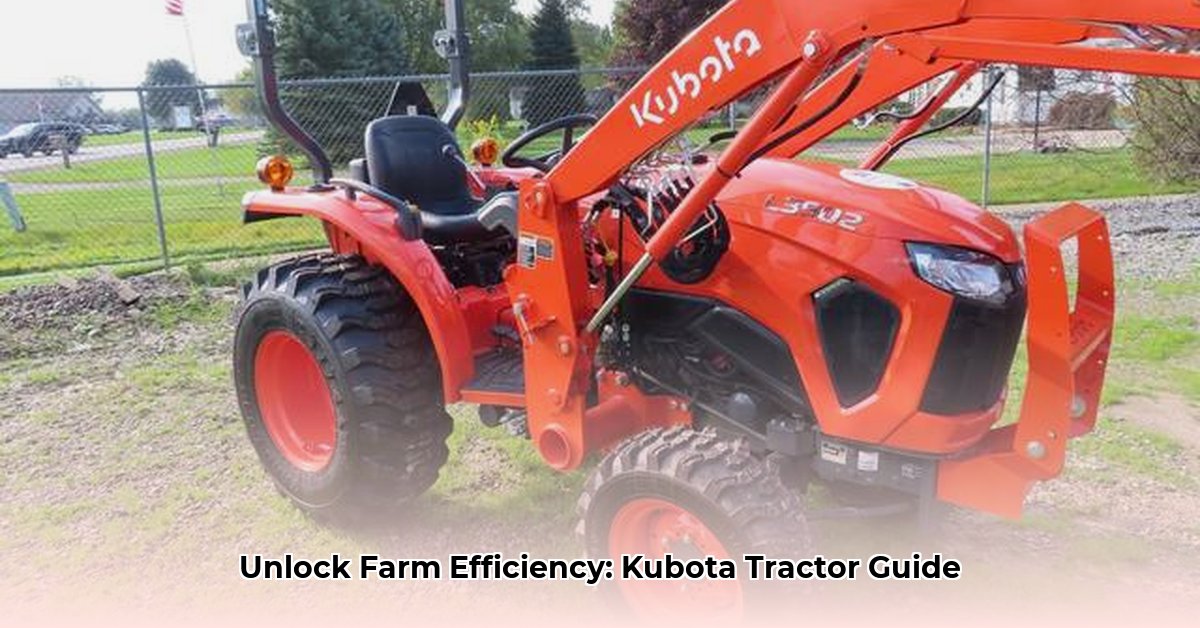
Choosing the right Kubota tractor and loader is a crucial investment for any farm or landscaping operation. The ideal model depends heavily on the scale and type of work you'll be undertaking. Will it be used for light landscaping tasks, or will it be handling heavy-duty construction projects and moving large quantities of materials? Understanding your needs is the first step toward maximizing your return on investment (ROI). A smaller, more compact model like the BX2680 might suffice for smaller properties or detailed landscaping, while larger farms and construction sites may require the power of a machine such as the M5-111HC. Considering the size of your property and the types of work you'll be doing will drastically impact your choice. For information on Kubota tractor oil types, check out this helpful resource: Kubota Oil Types.
Comparing Kubota Tractor and Loader Models
Kubota offers a diverse range of tractors and loaders to accommodate various needs and budgets. The following table provides a comparison of a few popular models. Remember to consult Kubota's official website for the most up-to-date specifications, as these can change.
| Model | Horsepower | Lifting Capacity (lbs) | Transmission Type | Best Suited For |
|---|---|---|---|---|
| L2501 | 24 | 1,500 | HST | Smaller farms, landscaping, light construction |
| BX2680 | 26 | 1,146 | HST | Garden maintenance, smaller properties, light-duty tasks |
| M5-111HC | 111 | 8,000+ | HST/Gear | Large farms, heavy-duty construction, significant material handling |
The differences in horsepower and lifting capacity are immediately apparent. The L2501 is ideal for lighter tasks, while the M5-111HC is built for heavy lifting and demanding applications. Choosing the right model involves matching the machine's capabilities to your workload.
Key Features and Considerations
Beyond horsepower and lifting capacity, several key features can significantly impact your experience with a Kubota tractor and loader. The transmission type is a crucial factor: Hydrostatic transmissions (HST) provide smooth and precise control, making maneuvering easier, especially in tight spaces. Attachment compatibility is equally important; consider which attachments (backhoe, grapple, snowblower, etc.) you might need now and in the future. This will help you choose a model with the appropriate capabilities. Do you anticipate needing a wide range of tools and attachments, or are your needs more specialized?
Maintaining Your Kubota Investment: A Guide to Longevity
Regular maintenance is vital for maximizing the lifespan and efficiency of your Kubota tractor and loader. Consistent oil changes, filter replacements, and routine inspections are paramount. Following Kubota's recommended maintenance schedule is essential to avoid costly repairs and ensure smooth operation. Consider the frequency of maintenance and the associated costs when factoring in the overall cost of ownership. Shouldn't a significant investment in equipment be treated with consistent maintenance?
The Total Cost of Ownership: A Comprehensive Look
The initial purchase price represents only a portion of the total cost of owning a Kubota tractor and loader. Fuel efficiency, maintenance costs, and potential repair expenses all contribute to the overall cost. While a Kubota is a sizable investment, the long-term return on investment can be substantial, especially with proper maintenance and efficient operation. It's important to consider the total cost of ownership to ensure your purchase aligns with your budget and financial goals. How much fuel efficiency matters to you will likely affect the model choice.
Real-World Applications and ROI
Kubota tractors and loaders boast remarkable versatility, finding applications across diverse sectors. From agricultural operations to landscaping and construction, these machines are adept at a wide variety of tasks, including moving materials, clearing land, and digging. The diverse applications available make these machines valuable assets across various industries.
Calculating Your Return on Investment (ROI)
Calculating the ROI for a Kubota tractor and loader requires a thorough assessment of costs and benefits. The following steps provide a framework for calculating your ROI:
- Initial Investment: This includes the purchase price, delivery, and any necessary attachments.
- Operating Costs: Factor in fuel, maintenance, and labor.
- Increased Efficiency/Productivity: Quantify time and labor savings from increased efficiency.
- Reduced Costs: Consider any reductions in fuel or labor costs.
- Resale Value: Estimate the potential resale value after several years.
- ROI Calculation: Use the standard formula: (Total Revenue - Total Costs) / Total Investment.
Remember, this is a simplified model. External factors can affect the actual ROI. Precise calculation requires careful attention to detail. Does this approach sufficiently address the complexities of ROI calculation?
Precision Farming and ROI Enhancement
Integrating precision farming technologies can further enhance ROI. GPS guidance, yield monitoring, and variable-rate application optimize resource use and boost yields. The added investment might seem daunting but is often justified by the long-term benefits. These technologies could lead to improvements in efficiency and yield. Have you considered the impact of precision farming technologies on your farming operation?
Beyond Financial Returns: Long-Term Sustainability
Apart from immediate financial gains, consider long-term sustainability aspects. Improved soil health, reduced environmental impact, and enhanced operational efficiency contribute to sustainable farming practices. The long-term benefits of sustainable farming are of great significance.